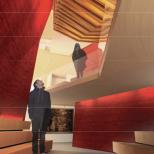
Interior Design focuses spatial experience at the scale of interiors, examining how materials, light, form, technology, culture and human behaviour shape the places we inhabit. The specialization combines this focus with the interdisciplinary breadth of Environmental Design.
Through studio projects, research, drawing, model-making, materials, lighting, building systems and digital tools, you will develop an interior-design practice grounded in creativity, inclusion, environmental responsibility and professional knowledge. You will also engage critically with computational design, artificial intelligence, digital fabrication and emerging forms of spatial visualization while strengthening the human judgment and material understanding central to interior design. The specialization is accredited by the Council for Interior Design Accreditation (CIDA).
Program Highlights
At the End of this Program...
At the end of this four-year program, you will earn a Bachelor of Design (BDes) degree.
Admissions Requirements
- For Ontario high school students, a minimum overall average of 70%
- Portfolio
- Statement of Intent
- Official transcripts
- See detailed academic requirements here
Jobs You Can Get
Graduates build careers and pursue advanced study across fields such as:
- Residential, workplace, retail, hospitality and institutional interior design
- Graduate studies in interior design, architecture, urban planning, environmental studies and related disciplines
- Exhibition and experience design, lighting, visualization, design research and spatial strategy
Internships & Experiential learning
OCAD U offers so much more than co-ops because creative careers take many forms. Our career services help you build a professional community, valuable experience and skills you need for a meaningful career. Get access to:
- Short experiential learning placements from among hundreds of organizations
- Creative in-class projects with real-world industry partners
- Exclusive summer internships
- Gallery exhibitions of your work
- Freelance creative opportunities
- Jobs after graduation
What You'll Do in the Program
In first year, you’ll take intro classes in topics such as:
- Colour
- 2D Design
- Environmental Design
- Materials
- Drawing
- Digital Design
In second year, you will study topics in more depth, such as:
- Personal Space
- Colour, Light and Environment
- Structure
- Presentation Drawing
- Social Space and Diversity
In third year, you will deepen your interior-design practice through advanced studios and courses in lighting, accessibility, systems, materials and research, including:
- Residential and Inclusivity
- Lighting
- Accessible Design
- Residential Systems and Materials
- Retail and Hospitality
- Research
- Commercial Systems and Materials
In fourth year, you will develop a major year-long interior design thesis: an independent investigation that brings together your research, values, technical learning and creative direction. You will also take advanced interior-design courses and electives in social sciences, visual and critical studies or humanities, including:
- Residential Interior Design
- History and Theory of Interiors
- Professional Practice
- Office Interior Design
You’ll showcase your work at GradEx - OCAD U’s Graduate Exhibition, the biggest free art and design exhibition in Toronto with more than 40,000 visitors.
CIDA Accreditation
The Interior Design Specialization in the Environmental Design Program leading to the Bachelor of Design undergraduate degree is accredited by the Council for Interior Design Accreditation (CIDA), www.accredit-id.org, 206 Cesar E. Chavez Ave SW, Suite 350, Grand Rapids, MI 49503.
The CIDA-accredited program prepares students for entry-level interior design practice, advanced study and application for membership in professional interior design organizations. The Bachelor of Design degree granted by OCAD University meets the educational requirement for eligibility to sit for the National Council for Interior Design Qualification Examination (NCIDQ Exam). For current eligibility requirements, visit www.cidq.org/eligibility-requirements.